Reference system and edition
Factory buyer guide
Control pencil barrel, print, eraser, ferrule, and packaging colors from reference to production.
Approve pencil colors by reference system, material and finish, physical sample, lighting, tolerance, component matching, artwork revision, and batch inspection.
Finished pencils: 100 cartons per style, with 2,880 pencils per carton (288,000 pencils per style). For mixed orders totaling more than 300 cartons, the minimum is 50 cartons per style (144,000 pencils). An order totaling exactly 300 cartons does not qualify for this exception.
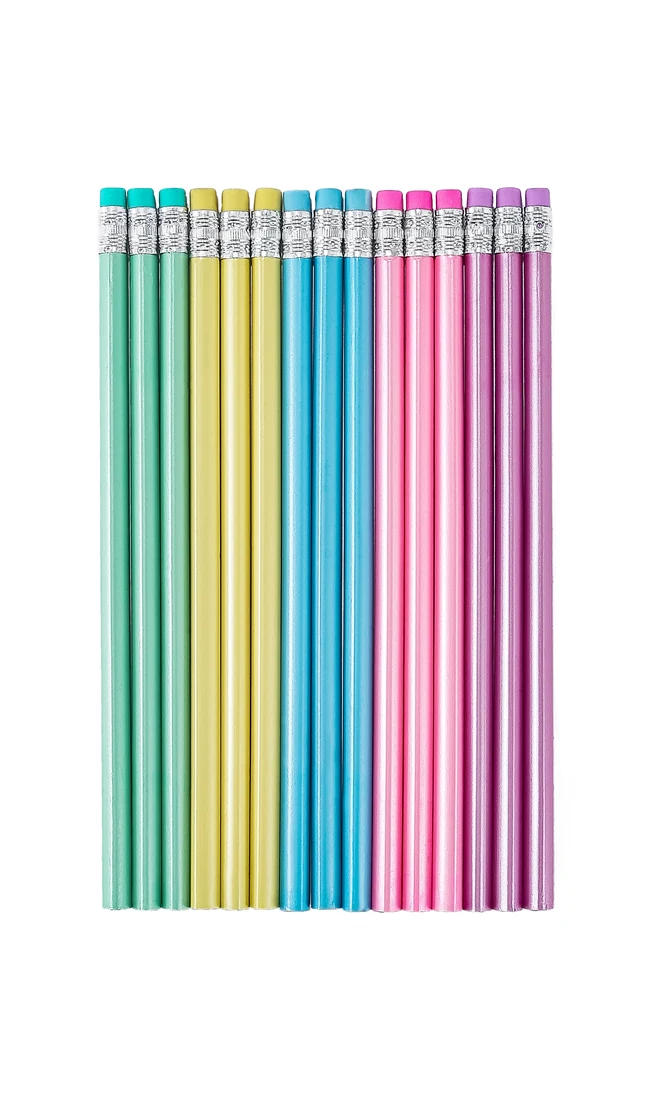
Who this is for
Private-label brands, promotional-product distributors, designers, stationery importers, packaging teams, and quality inspectors
Use this page to prepare one measurable specification and commercial basis before comparing suppliers.
01
Name the color system, edition, material, and finish
A color code is incomplete without the reference system and edition, coated or uncoated context where relevant, target component, substrate, coating system, gloss, opacity, metallic or fluorescent effect, and intended viewing condition. The same number can appear different on paint, ink, foil, plastic, rubber, wood, and paper.
Component and substrate
Finish and gloss
Viewing condition
02
Separate every visible component
Create distinct color approvals for the barrel, logo or print, dip end, ferrule, eraser, color stripe, wood, retail box, insert, label, and carton graphics. Do not assume one digital swatch controls materials produced by different suppliers or processes.
Barrel and end treatment
Logo, foil, or print
Ferrule and eraser
Retail and logistics packaging
03
Use a physical limit sample or agreed tolerance
Approve a production-representative sample under agreed light and viewing geometry. When instrumental measurement is required, record the device, color space, illuminant, observer, measurement area, surface preparation, tolerance, and treatment of texture, metallic effects, transparency, or visible wood grain.
Master or limit sample
Lighting and viewing
Measurement method
Tolerance and special effects
04
Control artwork and sample revisions together
The approved color must point to the same artwork, barrel construction, coating, print process, component, and packaging revision that production will use. Record date, approvers, deviations, comments, retained samples, and which earlier samples are superseded.
Artwork and product revision
Approval date and owner
Deviation record
Retained and superseded samples
05
Inspect batch variation and cross-component harmony
Sample across production time, lines, batches, cartons, and component lots where relevant. Check individual color against its approved reference and assess the assembled pencil and retail pack together, because acceptable components can still create an unacceptable combined appearance.
Across-batch sampling
Component-lot traceability
Individual color result
Assembled appearance decision
Color release gate
Release color only when the code, material, finish, sample, and tolerance describe the same object.
A controlled color approval connects the reference system to each real substrate and process, physical viewing or measurement, artwork revision, retained samples, batch inspection, and assembled appearance.
Reference definition
Record system, edition, target component, substrate, finish, and viewing condition.
Physical approval
Use a production-representative master or limit samples for the exact process.
Revision lock
Connect color approval to the released artwork, construction, process, component, and pack.
Batch control
Sample across time and lots; inspect both individual components and assembled appearance.
Factory quotation route
Release color only when the code, material, finish, sample, and tolerance describe the same object.
Send the measurable product, pack, quantity, destination, inspection, document, and commercial inputs identified on this page. Finished pencils: 100 cartons per style, with 2,880 pencils per carton (288,000 pencils per style). For mixed orders totaling more than 300 cartons, the minimum is 50 cartons per style (144,000 pencils). An order totaling exactly 300 cartons does not qualify for this exception. Order quantities and packing for pencil slats, boards, and unfinished pencil bodies are agreed separately by specification. Samples are for evaluating a planned production order; sample availability, quantity, cost, freight, and timing are confirmed separately.
FAQ
Questions buyers should settle before production.
Is a Pantone code enough to approve a pencil color?
No. Also define the reference edition, component, material, coating or print process, finish, lighting, physical sample, tolerance, and approval owner.
Why does the same color look different on the eraser and barrel?
Rubber, paint, plastic, metal, foil, ink, wood, and paper reflect light differently. Approve each component on its real material and review the assembled product.
Can color be approved from a phone photo?
A photo can document appearance but is not a reliable master because cameras, lighting, screens, compression, and viewing conditions change color. Use a physical reference or agreed measurement route.
How should color variation be inspected?
Define sampling across batches and component lots, the physical or instrumental comparison method, lighting, tolerance, defect classification, and disposition authority before production.
Continue researching
Related buyer decisions.
Private-Label Pencil Printing Method GuideCompare foil, screen, pad, transfer, and other pencil decoration routes by barrel shape, coating, artwork, color, adhesion, registration, sample, and inspection.
Wax-Based vs Oil-Based Colored Pencil Request GuideSpecify colored-pencil cores by use, laydown, blend, hardness, breakage, sharpening, color range, lightfastness request, sample, and evidence—not labels alone.
Pencil Retail Packaging Dieline & Preflight GuideCheck pencil packaging dielines, dimensions, bleed, safe areas, barcodes, copy, materials, inserts, fit, print, finishing, sample, packing, and revision control.
Custom Logo Pencil Artwork Guide | Files, Colors & ApprovalPrepare custom logo pencil artwork with usable files, color references, placement, print-method inputs, proofs, samples, and measurable production approval.
Custom Pencil Artwork & Sample Approval ChecklistDownload a free editable XLSX to control custom pencil specifications, logo artwork, print proofs, physical samples, deviations, and production release.
Painted vs Natural Wood Pencil Barrels | OEM GuideCompare painted, clear-coated, stained, and natural-wood pencil barrels by finish sample, logo method, surface acceptance, claim evidence, and packaging.
Factory quote
Send the specification to the factory
Tell us your destination market, quantity, target price, product route, and packaging requirement. We will match the material grade and production stage for the order.
Fast quote checklist
Finished pencils: 100 cartons per style; materials quoted separately
Product route
Quantity or annual volume
Destination country or region
Packaging, certificate, and target price
Open inquiry form